Using Golden Percentage in Dentistry for Ideal Tooth Proportions
One critical aspect of esthetic dentistry is creating geometric or mathematical proportions for esthetic outcomes. Although there are several theories, i.e., golden ratio and recurring esthetic dental (RED), applying the concept of golden percentage in dentistry creates restorative outcomes that are both predictable and pleasing to the eye.
Golden percentage is a term and principle that predicts and applies the ratio between a larger and smaller dimension. Mathematically, the ratio is written as AB:BC=AC:AB and is 1.618:1, which is a mathematical constant applied in engineering strategies and architectural designs and found throughout nature.

The application of the golden ratio in dentistry is based upon the apparent mesiodistal width of the anterior teeth as viewed from the frontal aspect. As much as the golden percentage has a place in dentistry, it is not universally accepted as a definitive and measurable dimension to be utilized concretely.
Gerard Ciche, DDS, eloquently described how the golden proportion fits into the world of esthetic dentistry. He said, “Esthetic dentistry combines measurable dimensions and artistic sensitivity. The geometric aspect can be systematized and taught, whereas the artistic sensitivity and feelings vary from individual to individual and are learned through sculpting and experience.”
Dr. Ciche referenced the importance of both science and art in creating esthetic outcomes pleasing to the eye. Golden percentage is one piece of scientific understanding and application that may be utilized in the restorative process.
Golden Percentage in Dentistry to Evaluate Tooth Proportion
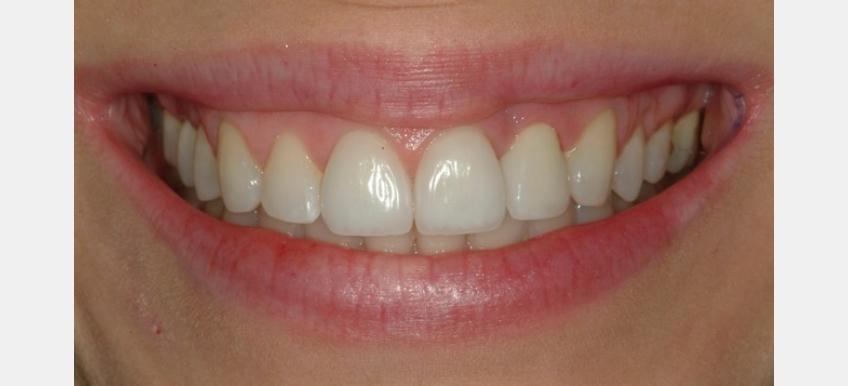
Restorative dentistry aims to create beautiful anterior teeth and pleasing smiles. While tooth restoration is an important component, beauty relates to the patient’s overall facial appearance. That is, how well do teeth fit into the big picture of the patient’s face?
Numerous studies, concepts, and techniques are applied and described for achieving success in restorative esthetic dentistry. Golden percentage is one such concept that has been described many times in the dental literature. Conceptually, the ratio has merit in creating proportional design, but in application, it is limited by the natural dissimilarities within patients’ teeth alignment and appearance.
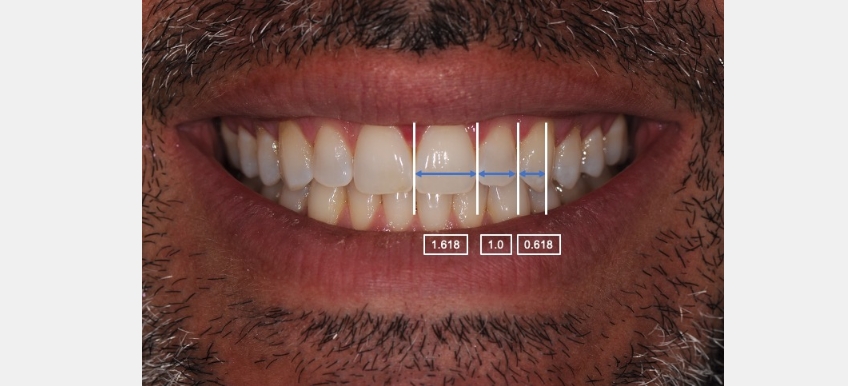
In 1999, Steven Snow, DDS, authored an article explaining how the direct application of golden proportions in dentistry significantly affects the patient’s overall appearance.
The true golden proportion of the anterior teeth — central incisor: lateral incisor: canine — creates a ratio of 1.618: 1.0: 0.618, respectively. Although this proportion is pleasing to the eye, the drawback is that it represents a unilateral appearance. Because of the natural variability and asymmetry in patients from the left versus the right side, the concrete application of this ratio will not produce pleasing results.
As the following diagram shows, variability in the patient’s visual asymmetries between right and left creates visual disharmony and stress.
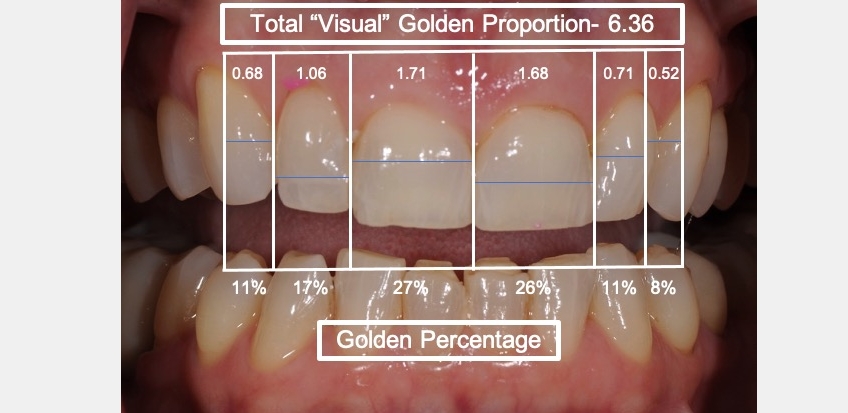
Many factors play into the observed tooth proportions of the anterior teeth. Tooth rotation, spacing, overlap, and other misalignment situations can negatively affect frontal tooth appearance. Dr. Snow recommended using golden percentage is more applicable as a reference toward symmetry and beauty. This concept can help apply visual perception chairside and determine tooth proportional discrepancy.
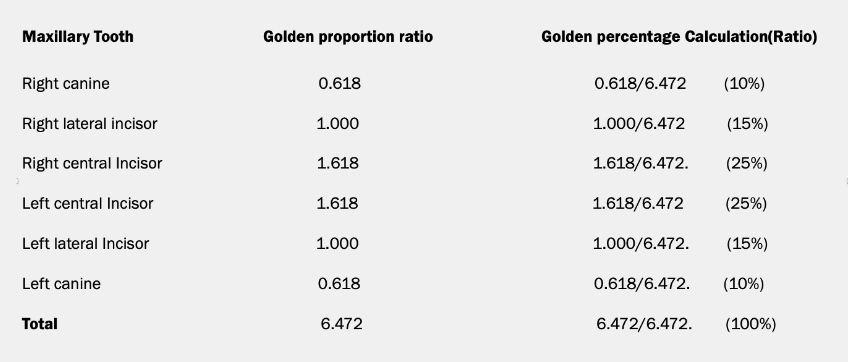
Case Study: Addison’s Restoration of Maxillary Peg Lateral Incisors
Golden percentage concepts can be utilized in the restoration of peg lateral incisors, and there are precision instruments that aid in proportional design and evaluation.
My granddaughter, Addison, 13, exhibits maxillary peg laterals, of differing dimensions, and is about to begin her second phase of orthodontics.
Peg laterals are common deficiencies seen in many patients. Maxillary peg laterals are the second most common missing teeth behind third molars. One issue with restoring maxillary peg lateral incisors is what size, width, and length to make these teeth.
In addition, if there is extra inter-tooth space to close, it complicates the restorative process because the “extra space” presentation limits visualization of the entire anterior sextant until the orthodontics is complete. These circumstances, such as Addison’s, require tools for planning and execution.
The literature contains strategies for designing and restoring undersized teeth to an acceptable appearance. When confronted with a situation like Addison’s, golden percentage and proportional dividers help determine tooth length and width and are valuable for design and reference.
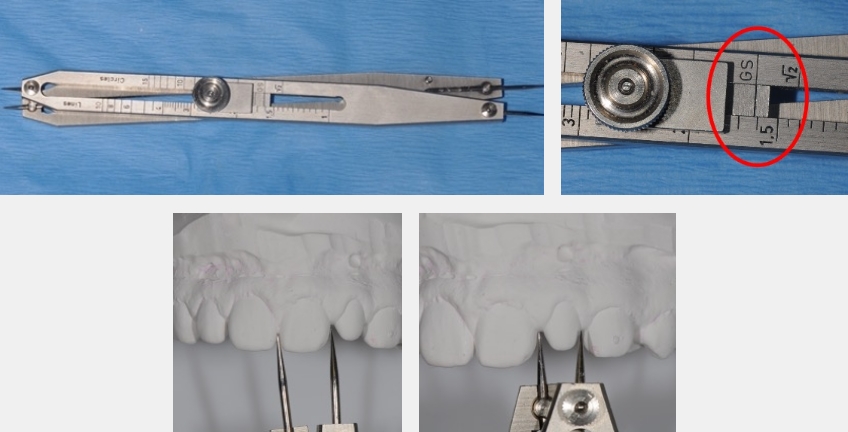
The proportional divider is a ratio-measuring device used in various disciplines, including engineering and architecture, to determine ratios between parts or dimensions. It may be purchased at a science supply store, hardware store, or online.
When the device is set in the golden proportion or golden standard mode, the caliper ends provide an exact ratio from one end to the other. Measuring and setting the device with the long endpoints determines the 1.0 ratio reference. Measuring with the opposite, or short endpoints, provides the golden proportion ratio of 0.618. This tool provides a visual proportional reference of one dimension related to another.
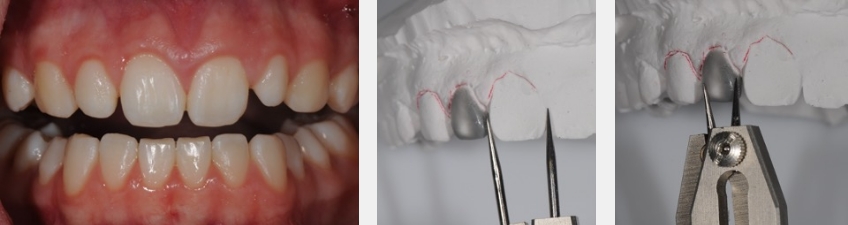
The proportional divider can provide information about the pleasing visual dimension of Addison’s restored teeth when referencing her maxillary peg laterals. Set to the golden standard ratio dimension, Addison’s central incisors are measured with the long endpoints of the device. The resulting width prescribed by the opposite short endpoints recommends that her restorations approximate this width ratio.
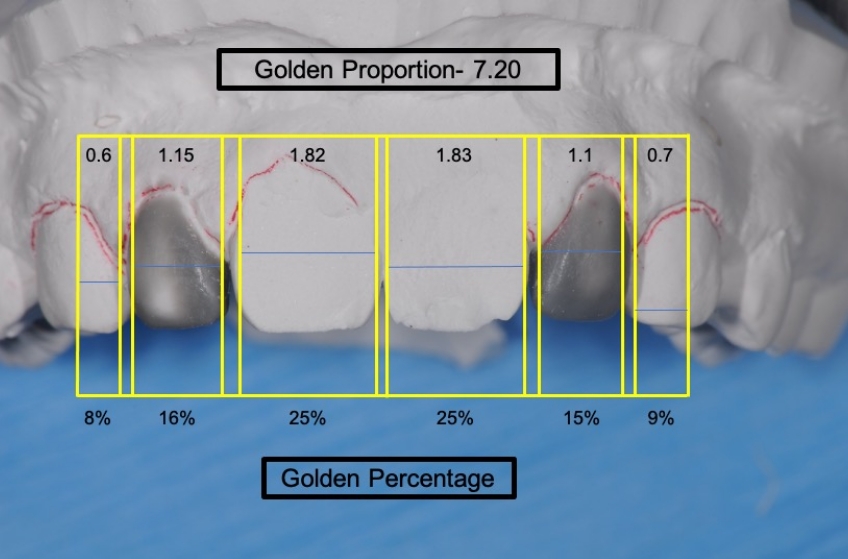
A diagnostic wax-up was created from the dimensions proposed by the golden proportional dividers. Due to the “extra space” in Addison’s arch form and arch relationship, it’s challenging to visualize the ultimate tooth proportion outcome following her second orthodontic treatment phase. However, using the proportional dividers provides a definitive reference to what should be a pleasing outcome.
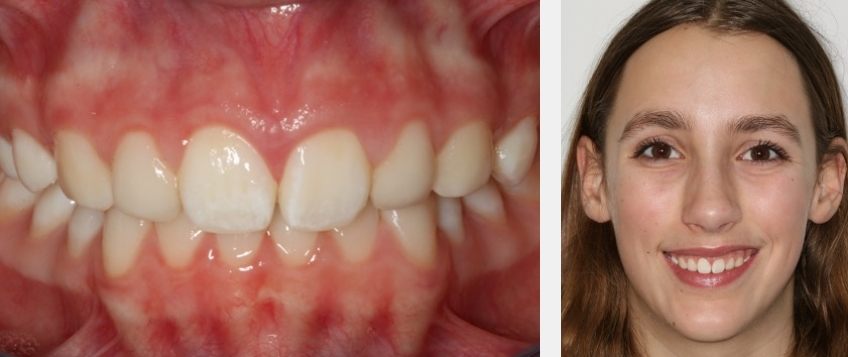
The diagnostic wax-up was used as to create the composite build-ups. As the maxillary lateral incisors are now in golden percentage to the central incisors, it can be assumed the final orthodontic outcome will be visually pleasing. The final post-orthodontic appearance is still to be seen, but by applying the concept of golden percentage in dentistry, there is greater predictability in the esthetic outcome.
References
- Lombardi, R. E. (1973). The principles of visual perception and their clinical application to denture esthetics. The Journal of Prosthetic Dentistry,29(4), 358-382.
- Greenburg, J. R. (1992). Shaping anterior teeth for natural esthetics. Esthetic Dentistry, 3, 8688.
- Cohen, M. (Ed.). (2008). Interdisciplinary Treatment Planning. Quintessence Pub.
- Snow, S. R. (1999). Esthetic smile analysis of maxillary anterior tooth width: the golden percentage.Journal of Esthetic and Restorative Dentistry,11(4), 177-184.
SPEAR campus
Hands-On Learning in Spear Workshops
With enhanced safety and sterilization measures in place, the Spear Campus is now reopened for hands-on clinical CE workshops. As you consider a trip to Scottsdale, please visit our campus page for more details, including information on instructors, CE curricula and dates that will work for your schedule.

By: Jeffrey Bonk
Date: June 30, 2022
Featured Digest articles
Insights and advice from Spear Faculty and industry experts