Artificial Intelligence (AI) in Dentistry: RPD Design
Artificial intelligence is a collective term coined by John McCarthy in 1958 as “the science and engineering of making intelligent machines.” This encompasses software with basic algorithm functions, like a basic chess game, to more complex self-learning AI software, such as facial recognition software and product-suggesting online applications. AI in dentistry is something that is starting to be more useful and will only grow with adoption.
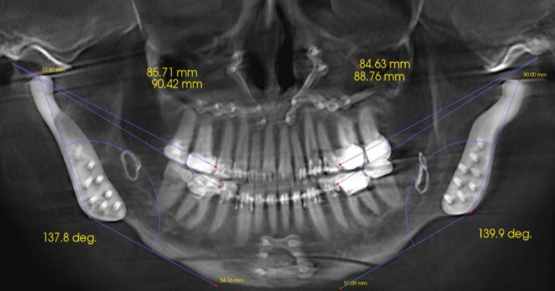
Many software systems are now using artificial intelligence to analyze radiographs and procedurally scan for decay, open margins, and pathological anomalies. AI has the potential to standardize diagnosis, treatment, and insurance claim submissions across practitioners.
AI in dentistry
In dentistry, we’re accustomed to digital workflows in our practices through intraoral scanners and computer-aided design software. Intraoral scanners discern teeth, soft tissue, and extraneous objects and can procedurally exclude foreign objects from the scan making it easier to create better scans.
Designing a custom-made restoration with ideal margins, contacts, and contour in seconds is now possible with AI. Thanks to those advances, many practitioners’ chairside crown and bridge procedures are streamlined.
Removable partial dentures
One area of dentistry full of contradiction and confusion has finally received the AI update it greatly needed: removable partial dentures.
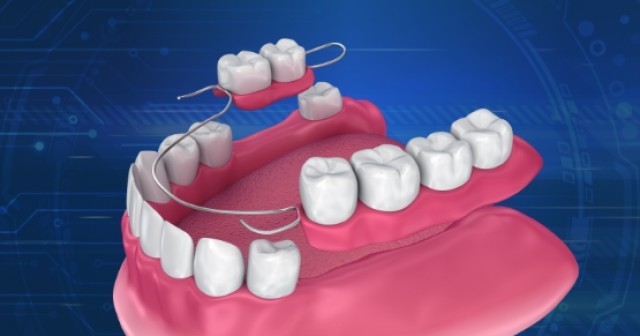
RPDs, one of our most versatile treatment options, allow for the simultaneous restoration of multiple missing teeth. Practitioners can restore a patient’s vertical dimension, restore missing soft tissue and teeth for esthetic cases, and fabricate obturators after surgical resection.
However, RPDs have an issue that makes them a burden to adopt in practice: There are multiple design philosophies that create significant confusion among emerging dentists — so much so that many graduating dentists prefer to delegate RPD design to the laboratory.
Unfortunately, the number of trained technicians is decreasing with the rise of computer-aided design and manufacture. That leaves RPD design at risk of being unguided by any reputable design philosophy. In response, there is online AI-assisted software designed with the algorithms of RPD design, including Spear’s RPD design philosophy.
AI-assisted RPD design
Being able to design partial dentures for every situation while abiding by a specific design philosophy can sometimes be challenging. There are many design philosophies, and while all are valid, they differ in how they approach clasp choices, plating of teeth stress release, and indirect retention.
AiDental is an algorithm-driven app that assists dentists and dental technicians in designing RPDs based on different referenced design philosophies. The app calibrated the design philosophies of the most-used references, including Spear Education’s RPD design philosophy. A user can select the missing teeth of their case and the location of retentive undercuts, and the software creates a design based on the selected philosophy. The user can then export the design into a PDF for easy communication with the laboratory. The app also has a training module that allows users to test their abilities against the AI algorithm.
AI and its impact on dentistry is constantly evolving. If you have interest in this field, Spear has launched a new RPD course for Spear members that focuses on evidence, convenience, and simplicity and provides a step-by-step guide to completing RPD patient appointments.
SPEAR ONLINE
Team Training to Empower Every Role
Spear Online encourages team alignment with role-specific CE video lessons and other resources that enable office managers, assistants and everyone in your practice to understand how they contribute to better patient care.

By: Ahmed Mahrous
Date: October 12, 2023
Featured Digest articles
Insights and advice from Spear Faculty and industry experts