Occlusal Vertical Dimension and the Edentulous Patient: Methods for Recording OVD
When treating edentulous patients, determining and recording an appropriate occlusal vertical dimension (OVD) is critical, even if implants will be used for retention and/or support. In this article, we consider two options for recording OVD. Both options would typically be completed as part of the jaw relation records appointment and occur just prior to making the bite records.
If the correct vertical dimension is recorded accurately, later prosthetic fabrication and insertion steps can be very predictable. If the vertical dimension is recorded as part of planning for a complete arch implant-retained prosthesis, the prosthetic space can be adequately evaluated, leading to more predictable surgical and restorative outcomes.
“Missing” OVD during prosthesis fabrication can lead to several problems for clinicians, including the need to repeat clinical steps, additional clinical appointments, unscheduled post-insertion appointments, negative impact on the patient’s facial appearance, functional problems, and the need to redesign or remake a prosthesis.

Option 1: Wax Rims
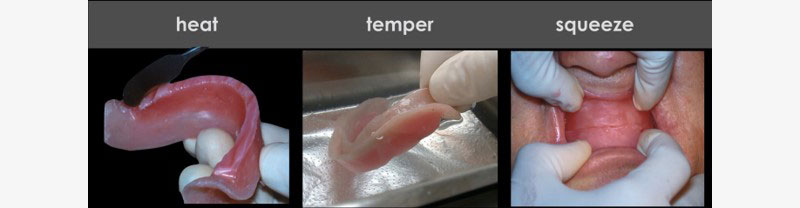
The first option for recording OVD is the most familiar to clinicians. In this approach, the maxillary wax rim is first adjusted esthetically, and the mandibular wax rim is subsequently adjusted to the desired vertical dimension. To do this, the mandibular wax rim is softened with heat and inserted into the patient’s mouth. The patient is directed to close until the previously determined optimal OVD is reached.
Option 2: Intraoral Tracer
The second option for recording OVD involves utilizing an intraoral tracer. Sometimes referred to as a pin tracer or a gothic arch tracer, the intraoral tracer method requires an adjustable stylus on one arch and a smooth, flat strike plate on the opposing arch.
In the example here, the components are from the CRS 10 kit from Candulor/Ivoclar Vivadent.
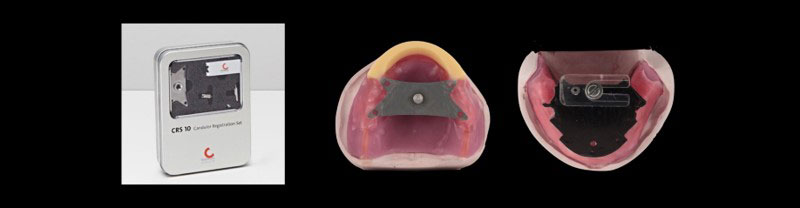
To capture the vertical dimension, the adjustable stylus is lengthened to increase OVD and shortened to decrease OVD. Adjusting the stylus length is easy: Simply turn the stylus counterclockwise to lengthen and clockwise to shorten. This is a huge benefit to the clinician, as subtle adjustments can be made to the pin in a way that can’t be easily replicated in the previous technique.
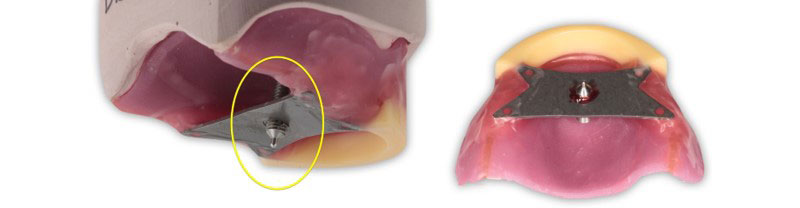
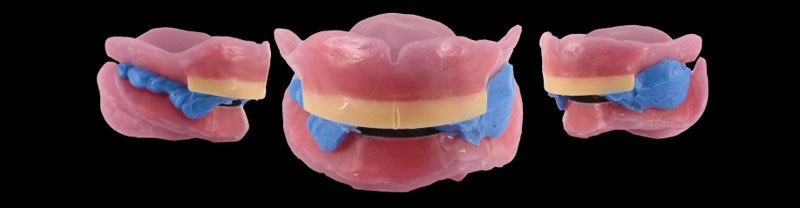
Once the stylus has been adjusted, it may be temporarily fixed using pattern resin or flowable composite. Fixing the stylus ensures that no changes in length occur as the bite records are made.
Which Option Is Better?
The bottom line is, accurate records reduce problems downstream and both techniques presented can provide an accurate recording of the desired occlusal vertical dimension and are a part of an overall method for making the bite record.
At first glance, the intraoral tracing method may seem more complex or technically challenging. In practice, the more I use the intraoral tracer approach as part of the bite record, the more I like the ability to fine-tune the vertical dimension. I’m actually more efficient during the clinical appointment.
If you haven’t tried this approach, I’d encourage you to call your technician and ask about their experience with records made this way (hint — they are usually way more accurate). Then, discuss how to introduce the approach into your own clinical workflow.
SPEAR ONLINE
Team Training to Empower Every Role
Spear Online encourages team alignment with role-specific CE video lessons and other resources that enable office managers, assistants and everyone in your practice to understand how they contribute to better patient care.

By: Darin Dichter
Date: February 5, 2020
Featured Digest articles
Insights and advice from Spear Faculty and industry experts