Milled vs. Waxed-And-Pressed Restorations: Which Is Better?
The answer depends on how well the preparation margin is refined and captured, digitally or with conventional material.
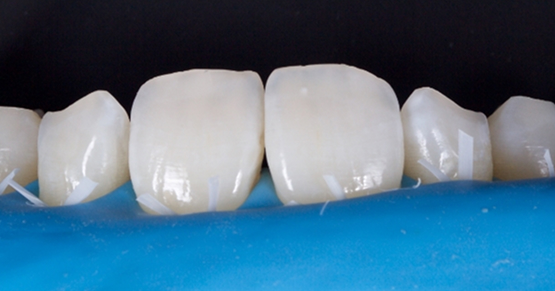
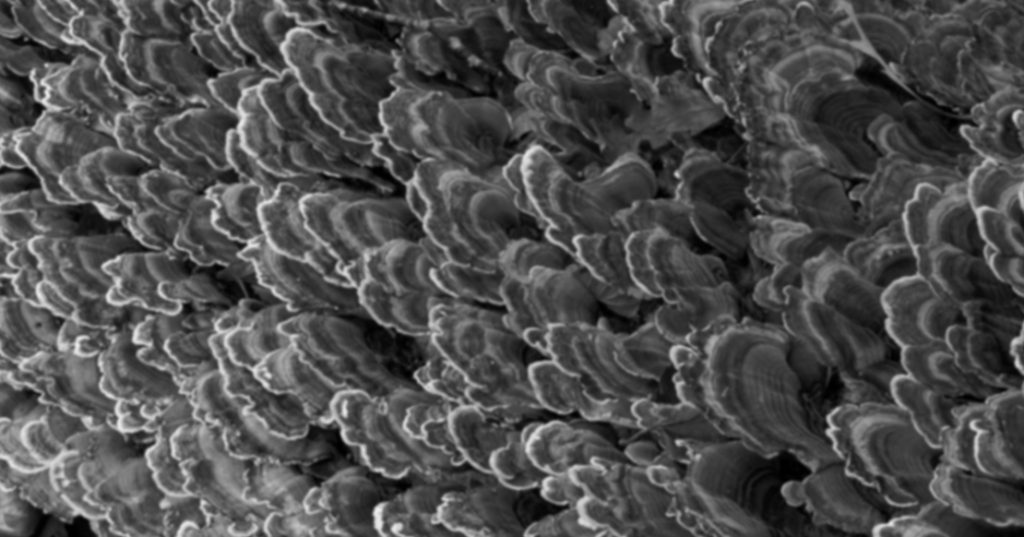
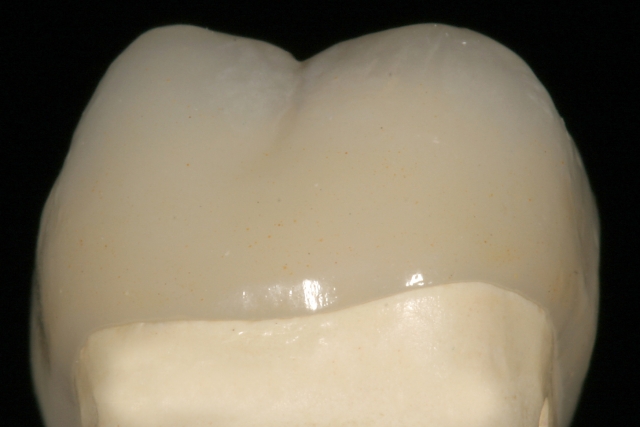
What’s the difference between an all-ceramic restoration that is milled and one that’s waxed and pressed (Figs. 1 and 2)?
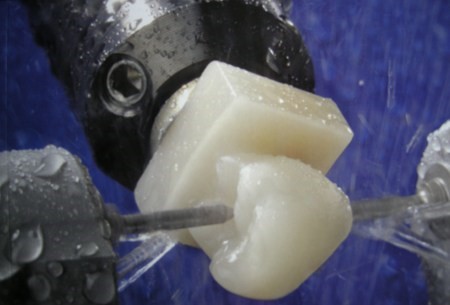
The answer is easy: One is milled and one is pressed. If, on the other hand, your question is which one of them is better, you first have to realize that, for all intents and purposes, the ceramic is the same. If the restoration was to be used in its “monolithic” form, the milled restoration has an esthetic edge over the pressed restoration.
This is because many of the all-ceramics can be milled using a “multilayer” block that can provide different esthetic properties (i.e., translucency/opacity) to different parts of the restoration. In contrast, a pressed restoration will have the same esthetic properties throughout. To create the illusion of translucency with a monolithic pressed material, external ceramic stains must be fired onto the ceramic with these restorations.
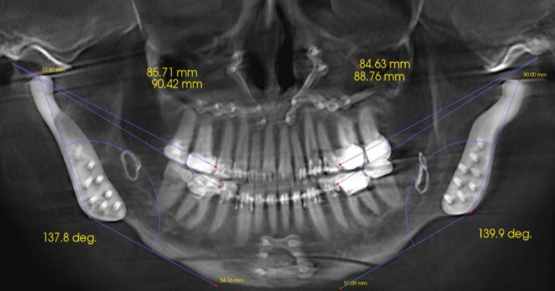
The real question that most dentists want to know is: Which restoration “fits” better? (Fig. 3)
Do milled or waxed-and-pressed restorations fit better?
As described by McLean and Von Fraunhofer, clinically acceptable marginal gaps are those that are < 120 micrometers.1 However, according to the American Dental Association Specification No. 8, the marginal fit of cemented restoration should be 25–40 micrometers to allow for luting cement thickness2; however, this range is seldom achievable.3
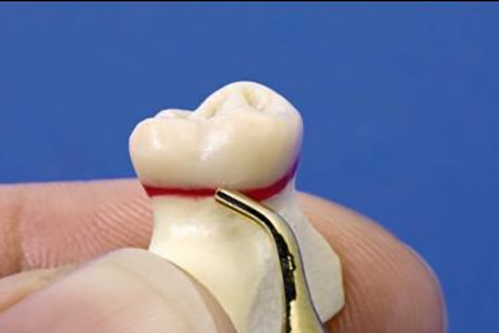
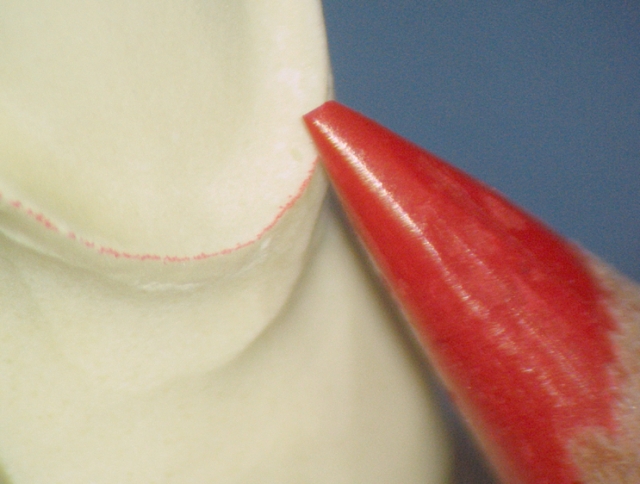
So, knowing that no restoration fits perfectly, the answer will vary depending on how well the margin of the preparation is refined and captured either digitally or with conventional impression material. If the margin is ideally prepared (smooth with no imperfections) and ideally captured (Fig. 4), then both the milled restoration and the waxed-and-pressed restoration will have an equally good fit.
If, on the other hand, the margin that is prepared and/or captured is less than ideal (Fig. 5), then the waxed-and-pressed restoration will have a better fit.
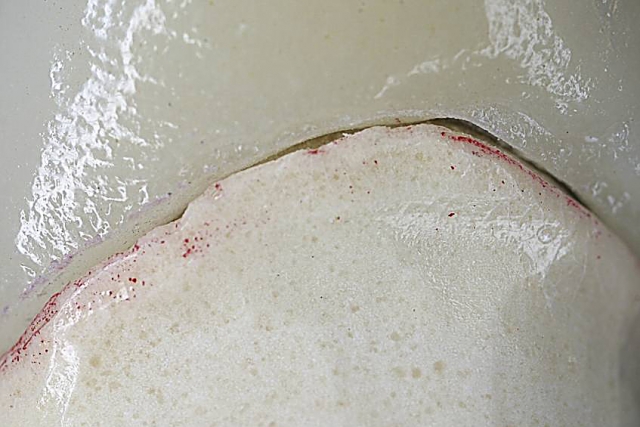
This is because the burs used in milling the restorations are not small enough to accommodate the minor discrepancies that can be present at the cavosurface margin. If a margin is less than ideal and the restoration is waxed and pressed, the wax can be carved and pressed into these small defects, thus enabling these restorations to fit better (Figs. 6 and 7).
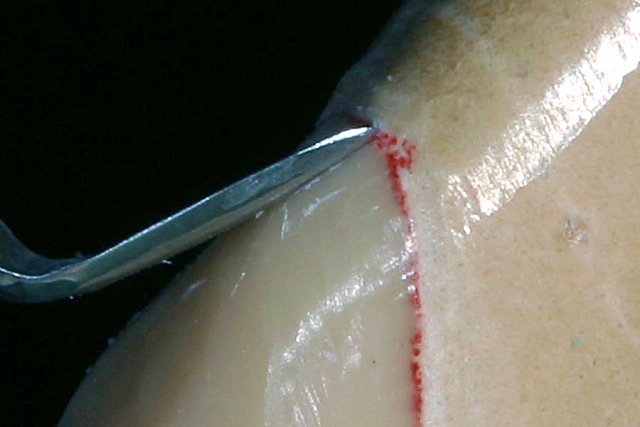
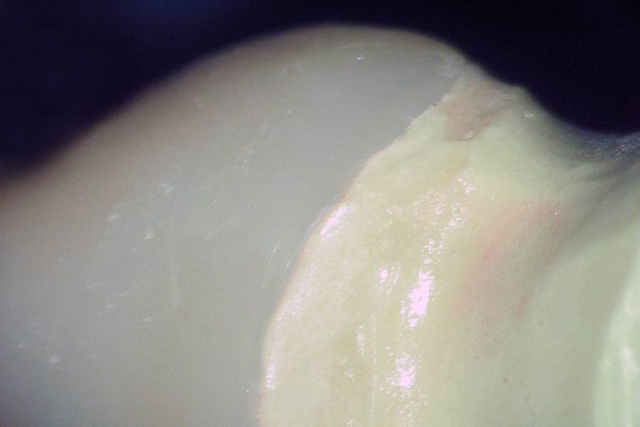
Both restorations can be used successfully, but the difference in fit is really in the clinician’s hands if milled restorations are used.
Resources
- May KB, Russell MM, Razzoog ME, Lang, BR (1998). Precision of fit: the Procera AllCeram crown. The Journal of Prosthetic Dentistry, 80(4), 394–404.
- Jw, M. (1971). The estimation of cement film thickness by an in vivo technique. British Dental Journal, 131, 107-111.
- Association AD. ANSI/ADA Specification No. 8 for zinc phosphate cement. Guide to Dental Materials and Devices 1970;5:1970-1971.
SPEAR NAVIGATOR
Transform how your practice runs by engaging the team through
coaching and training
A guided path to excellence through structured coaching and self-guided resources that will align your team, streamline processes and drive growth. Transform your practice by implementing Spear’s proven playbooks for developing and retaining a high-performing dental team.

By: Greggory Kinzer
Date: January 7, 2017
Featured Digest articles
Insights and advice from Spear Faculty and industry experts